When specifying stainless steel piping for industrial projects, understanding the difference between Schedule 10 (Sch 10) and Schedule 40 (Sch 40) is essential for achieving the right balance between performance, cost, and compliance.
Although both schedules are available in common austenitic grades such as 304, 304L, 316, and 316L, differences in wall thickness result in meaningful variations in mechanical strength, pressure suitability, weight, and overall system design. These factors directly influence material selection across industries including chemical processing, food and beverage, pharmaceuticals, utilities, and general industrial piping.
This guide explains the differences between Schedule 10 and Schedule 40 stainless steel pipes under ASTM A312, ASTM A778, and JIS G3459, with a focus on practical application guidance for engineers, consultants, and project managers.
What Does “Schedule” Mean in Stainless Steel Pipe?
In stainless steel piping, schedule refers to a standardized wall thickness classification for a given nominal pipe size.
Key principles include:
- The outside diameter (OD) remains constant for a given nominal size
- The schedule number defines wall thickness only
- A higher schedule indicates a thicker wall
- Thicker walls generally provide:
- Greater mechanical strength
- Higher resistance to internal pressure
- Increased pipe weight
Schedule designation does not, by itself, define allowable working pressure. Pressure suitability depends on multiple factors, including material grade, operating temperature, fabrication quality, and applicable piping codes.
Applicable Standards for Schedule 10 and Schedule 40 Pipes
Stainless steel pipes in Schedule 10 and Schedule 40 are commonly supplied under the following standards:
ASTM Standards
- ASTM A312
Seamless and welded austenitic stainless steel pipes intended for pressure, high-temperature, and corrosive service. This standard includes mandatory heat treatment, inspection, and testing requirements.
- ASTM A778
Welded austenitic stainless steel pipes intended for general corrosive service, where pressure qualification requirements are not as stringent as ASTM A312.
JIS Standard
- JIS G3459
A Japanese Industrial Standard for stainless steel pipes, commonly specified in regional projects and equipment designed to JIS requirements.
JIS commonly uses the terminology Sch 10S and Sch 40S, which correspond closely in dimensional intent to ASTM Schedule 10 and Schedule 40.
Schedule 10 Stainless Steel Pipe
What Is Sch 10 Stainless Steel Pipe?
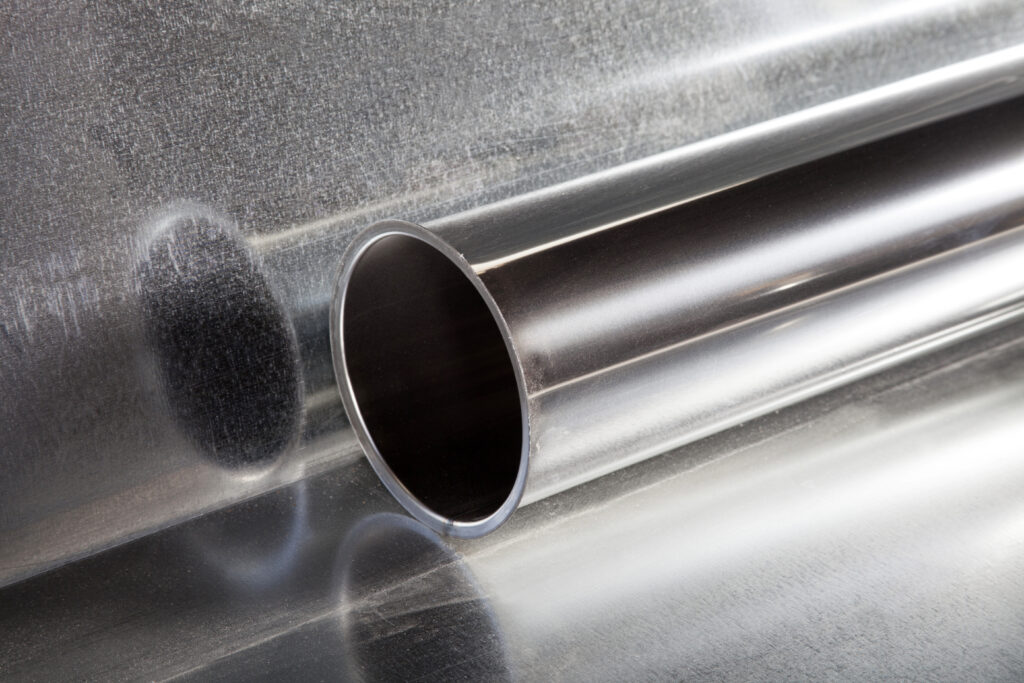
Schedule 10 stainless steel pipe is a thin-wall pipe classification where the outside diameter remains fixed and the wall thickness is lighter than higher schedules. It is commonly manufactured in austenitic stainless steel grades such as 304, 304L, 316, and 316L, and supplied under standards including ASTM A312, ASTM A778, and JIS G3459. Schedule 10 is typically used for low to moderate pressure and non-critical piping systems where reduced weight, good flow capacity, and cost efficiency are important.
General Characteristics
Schedule 10 stainless steel pipes are characterized by relatively thin wall construction when compared with higher schedules. This design results in:
- Reduced pipe weight
- Lower material usage
- Larger internal flow area for the same nominal diameter
Because of these characteristics, Schedule 10 pipes are often selected for systems where high mechanical strength or pressure resistance is not the primary design requirement.
Pressure and Service Considerations
Schedule 10 pipes may be used in pressure systems when manufactured to ASTM A312 and when supported by appropriate engineering calculations and applicable piping codes. The suitability of Schedule 10 for pressure service depends on factors such as pipe size, material grade, operating temperature, and system design conditions.
Schedule 10 pipes manufactured to ASTM A778 are intended for general corrosive service and do not include the same pressure qualification requirements as ASTM A312. Their use in pressure systems should therefore be evaluated carefully by a qualified engineer.
Typical Applications
Schedule 10 stainless steel pipes are commonly used in:
- Low-pressure process piping
- Utility and service lines
- Water distribution and drainage systems
- Food and beverage processing lines
- Pharmaceutical and clean utility systems
- HVAC and auxiliary piping
In these applications, the lighter weight and cost efficiency of Schedule 10 can provide meaningful advantages without compromising system performance when properly designed.
Schedule 40 Stainless Steel Pipe
What Is Sch 40 Stainless Steel Pipe?
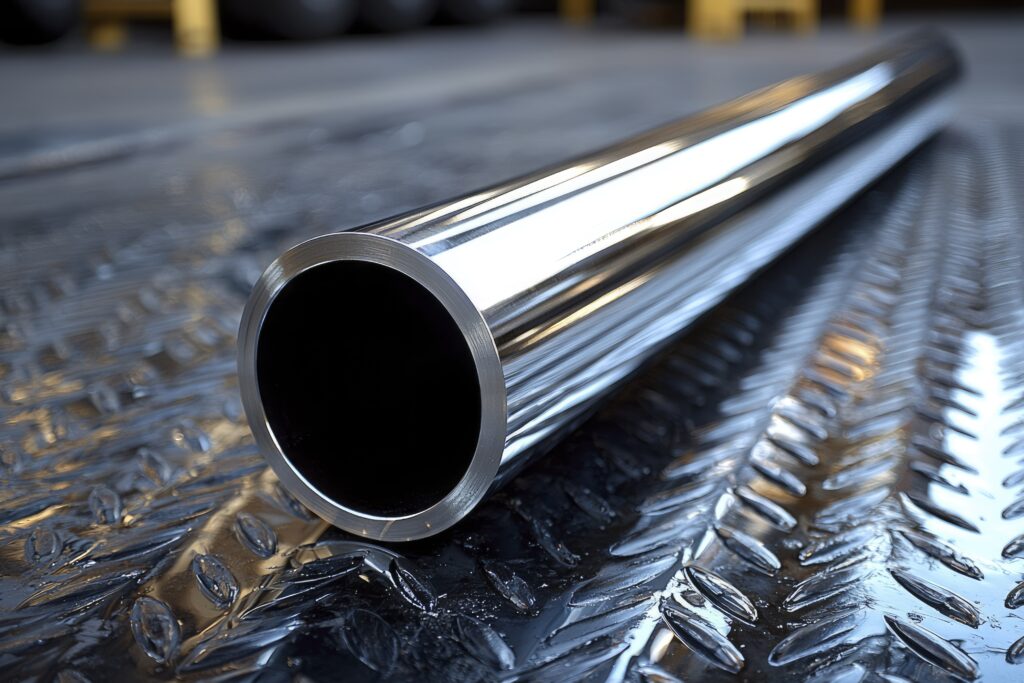
Schedule 40 stainless steel pipe is a widely used classification with thicker walls than Schedule 10 for the same nominal size, providing greater mechanical strength and higher resistance to internal pressure. It is commonly produced in austenitic grades such as 304, 304L, 316, and 316L, and supplied under ASTM A312, ASTM A778, and JIS G3459 standards. Schedule 40 is frequently specified for industrial piping systems that require higher durability and long-term reliability.
General Characteristics
Schedule 40 stainless steel pipes feature significantly thicker walls than Schedule 10 pipes for the same nominal size. This increased wall thickness provides:
- Higher mechanical strength
- Greater resistance to internal pressure
- Improved tolerance to vibration and external mechanical loads
Schedule 40 is widely regarded as a baseline industrial schedule and is often specified by default in many industrial projects.
Pressure and Mechanical Performance
When manufactured to ASTM A312, Schedule 40 stainless steel pipes are suitable for:
- Pressure-bearing piping systems
- Elevated temperature service
- Applications requiring higher mechanical reliability
Schedule 40 pipes manufactured to ASTM A778 may be used where pressure is incidental or secondary, but they are not intended for critical pressure service unless verified through engineering analysis and project specifications.
Typical Applications
Schedule 40 stainless steel pipes are commonly specified in:
- Chemical and petrochemical processing plants
- Oil and gas facilities
- Power generation systems
- Steam and condensate lines
- Industrial process piping
- High-demand utility services
Schedule 10 vs Schedule 40 Stainless Steel Pipe: Key Comparison
| Aspect | Schedule 10 Stainless Steel Pipe | Schedule 40 Stainless Steel Pipe |
| Wall thickness | Thinner wall construction | Thicker wall construction |
| Mechanical strength | Lower compared to Sch 40 | Higher due to increased wall thickness |
| Pressure suitability | Suitable for low to moderate pressure systems when properly designed | Suitable for higher pressure and more demanding service conditions |
| Pipe weight | Lighter weight | Heavier weight |
| Internal flow area | Larger internal diameter for the same nominal size | Smaller internal diameter for the same nominal size |
| Installation | Easier handling and installation | Requires more robust supports and handling |
| Cost consideration | Generally more cost-efficient | Higher material and installation cost |
| Typical standards | ASTM A312, ASTM A778, JIS G3459 | ASTM A312, ASTM A778, JIS G3459 |
| Common applications | Utility piping, food & beverage, pharma, low-pressure process lines | Chemical processing, power generation, industrial pressure systems |
Schedule 10 vs Schedule 40 Stainless Steel Pipe: Typical Size Comparison (ASTM A312 / ASTM A778)
| Nominal Pipe Size (NPS) | Outside Diameter (mm) | Sch 10 Nominal Wall Thickness (mm) | Sch 40 Nominal Wall Thickness (mm) |
| 1/2″ | 21.34 | 2.11 | 2.77 |
| 1″ | 33.40 | 2.77 | 3.38 |
| 1½” | 48.26 | 2.77 | 3.68 |
| 2″ | 60.33 | 2.77 | 3.91 |
| 3″ | 88.90 | 3.05 | 5.49 |
| 4″ | 114.30 | 3.05 | 6.02 |
| 6″ | 168.28 | 3.40 | 7.11 |
Material Grades Commonly Used
Both Schedule 10 and Schedule 40 pipes are commonly produced in austenitic stainless steel grades, including:
- 304 / 304L
General-purpose grades offering good corrosion resistance and weldability.
- 316 / 316L
Grades containing molybdenum for enhanced resistance to chlorides and aggressive environments.
Low-carbon “L” grades are preferred in welded piping systems to reduce the risk of intergranular corrosion after welding.
For detailed comparisons,
How to Choose Between Schedule 10 and Schedule 40
Schedule selection should be based on engineering requirements and applicable standards, not on cost alone.
Schedule 10 is typically selected when:
- Operating pressures are relatively low
- Weight reduction is important
- Flow capacity is a priority
- The system is non-critical or auxiliary in nature
- Project specifications permit thin-wall piping
Schedule 40 is typically selected when:
- Higher mechanical strength is required
- Pressure or temperature conditions are more demanding
- Long-term durability and safety margins are critical
- Industry standards or client specifications require it
- The system handles high-value or hazardous media
Engineering verification should always be performed for pressure systems.
Standards, Documentation, and Quality Assurance
For industrial projects, Schedule 10 and Schedule 40 stainless steel pipes are typically supplied with:
- Material Test Reports (MTR)
- Dimensional inspection records
- Non-destructive or hydrostatic testing where applicable
- Compliance documentation to ASTM A312, ASTM A778, or JIS G3459 as specified
ISO-certified manufacturers ensure consistency, traceability, and compliance across global supply chains.
Conclusion
Schedule 10 and Schedule 40 stainless steel pipes serve different but equally important roles in industrial piping systems. While both may be produced from the same stainless steel grades, differences in wall thickness result in meaningful differences in mechanical performance, pressure suitability, weight, installation requirements, and overall system cost.
Selecting the correct schedule ensures compliance with applicable standards, reliable system performance, and long-term operational safety. Engineering analysis should always guide schedule selection rather than default assumptions.
Need Help Choosing Between Schedule 10 and Schedule 40 Stainless Steel Pipe?

If you are deciding between Schedule 10 and Schedule 40 stainless steel pipes and need guidance on wall thickness, material grades, or applicable standards, Kanzen Tetsu is here to help.
We manufacture and supply austenitic stainless steel welded pipes in Schedule 10, Schedule 40, and other standard schedules, using grades such as 304, 304L, 316, and 316L, produced in accordance with ASTM A312, ASTM A778, and JIS G3459 requirements. Our team supports engineers and project teams in selecting the appropriate pipe schedule and specification based on service conditions and project needs.
Contact us now or give us a call at +603 3392 7273. We’re ready to support your next project with quality materials and expert advice.
Frequently Asked Questions
1. What is the difference between Schedule 10 and Schedule 40 stainless steel pipe?
The primary difference is wall thickness. Schedule 40 stainless steel pipe has a thicker wall than Schedule 10 for the same nominal size, providing greater mechanical strength and higher resistance to internal pressure. Schedule 10 is lighter and more cost-efficient for less demanding service conditions.
2. Can Schedule 10 stainless steel pipe be used for pressure applications?
Yes, Schedule 10 stainless steel pipe can be used in pressure applications when manufactured to ASTM A312 and when supported by proper engineering design and applicable piping codes. Suitability depends on pipe size, material grade, operating temperature, and service conditions.
3. Do Schedule 10 and Schedule 40 pipes have the same outside diameter?
Yes. For the same nominal pipe size, Schedule 10 and Schedule 40 stainless steel pipes have the same outside diameter. The difference lies in the wall thickness, which affects the internal diameter and pipe weight.
4. Which standards apply to Schedule 10 and Schedule 40 stainless steel pipes?
Schedule 10 and Schedule 40 stainless steel pipes are commonly supplied under ASTM A312, ASTM A778, or JIS G3459, depending on the intended service. ASTM A312 is typically specified for pressure and high-temperature service, while ASTM A778 is intended for general corrosive service.
5. How are the dimensions of Schedule 10 and Schedule 40 stainless steel pipes defined?
Pipe schedules such as Schedule 10 and Schedule 40 follow standardized dimensional systems that define outside diameter and wall thickness for each nominal pipe size. Manufacturing standards like ASTM A312, ASTM A778, and JIS G3459 reference these dimensional systems to ensure consistency across suppliers and projects.
6. Which stainless steel grades are commonly used for Schedule 10 and Schedule 40 pipes?
Commonly used grades include 304, 304L, 316, and 316L. Low-carbon grades (304L and 316L) are preferred in welded piping systems due to improved resistance to intergranular corrosion after welding.
